


✕


As demand for flexible housing and outdoor accommodation continues to grow, Custom Prefab Homes are becoming increasingly popular among homeowners, resort developers, and investors. Compared with standard prefab models, customized prefab homes offer greater design flexibility and stronger adaptability to unique project requirements. One of their biggest advantages lies in their ability to perform well in special environments where standard housing solutions may not be ideal.
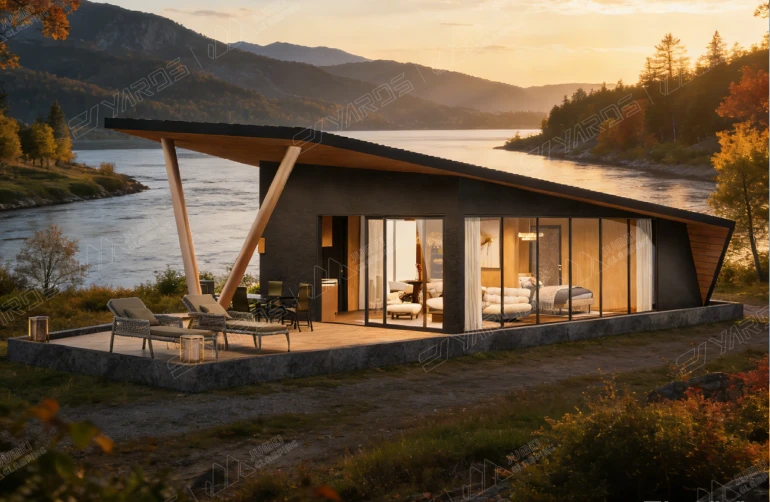
Customization allows prefab homes to be specifically designed based on local climate, terrain, and functional needs. This makes them highly suitable for projects in challenging environments such as mountains, forests, deserts, coastal areas, islands, snow regions, and remote outdoor destinations.
One of the key advantages of custom prefab homes is enhanced environmental adaptability. Different environments present different challenges, including strong winds, heavy rain, extreme heat, cold temperatures, high humidity, or sandy conditions. Custom design allows the structure to be optimized to handle these conditions more effectively.
For windy regions such as coastal areas, open grasslands, or mountain locations, custom prefab homes can be designed with reinforced steel structures, stronger anchoring systems, and improved aerodynamic exterior designs. These upgrades enhance structural stability and improve wind resistance.
In rainy or tropical environments, waterproof performance becomes a major priority. Custom prefab homes can be equipped with upgraded roofing systems, improved drainage designs, waterproof exterior panels, and moisture-resistant materials. These features help improve long-term durability and reduce maintenance requirements.
For hot climates or desert environments, thermal performance is critical. Customized prefab homes can include better insulation systems, UV-resistant exterior materials, reflective roofing, and optimized ventilation designs. These upgrades improve indoor comfort while reducing energy consumption.
Cold-weather adaptability is another major benefit of customization. In snowy or low-temperature regions, prefab homes can be upgraded with thicker insulation layers, thermal glass windows, advanced heating systems, and stronger roof structures to handle snow loads. This ensures comfortable living conditions even in harsh winter climates.
Terrain adaptability is also one of the strongest advantages of custom prefab homes. Standard housing solutions often struggle with uneven landscapes or remote locations. Custom prefab homes can be designed to fit challenging terrain such as hillsides, lakesides, forests, or elevated landscapes.
Flexible foundation systems allow customized homes to adapt to different site conditions while minimizing land disruption. This is especially valuable for eco-tourism resorts and nature-focused hospitality projects where environmental preservation is important.
Customization also improves space efficiency. Different projects require different layouts based on their purpose. Some projects prioritize residential comfort, while others focus on resort accommodation or hospitality use. Custom prefab homes allow buyers to optimize floor plans, room functions, and interior flow according to project needs.
For resort developers, this flexibility creates strong investment advantages. Customized prefab homes can be designed as luxury suites, family units, private villas, or premium glamping accommodations. This allows operators to target different market segments and improve guest satisfaction.
Aesthetic customization is another major advantage. Buyers can choose modern, minimalist, luxury, or nature-inspired designs to match project branding and environmental surroundings. This improves visual appeal and enhances overall project value.
Installation efficiency remains a strong benefit even with customization. Although the design is tailored, most components are still manufactured in controlled factory environments. This ensures faster production and shorter on-site installation compared with traditional construction.
For investors, custom prefab homes provide a balance between design flexibility, operational efficiency, and long-term performance. Instead of compromising with standard solutions, customization allows projects to achieve better functionality and stronger market competitiveness.
As demand for outdoor tourism, eco-resorts, and flexible housing continues to rise, more developers are choosing custom prefab homes to create high-value projects in unique environments.
Overall, Custom Prefab Homes offer major advantages for special environments through improved weather resistance, terrain adaptability, space optimization, and design flexibility. Their ability to meet specific environmental and operational needs makes them an ideal solution for modern residential and hospitality projects.


