


✕


With the rapid growth of eco-tourism and experiential travel, Luxury Tent Hotel projects have become one of the fastest-growing sectors in the hospitality industry. Compared with traditional hotels, luxury tent hotels require lower construction costs, shorter development cycles, and offer guests a unique connection with nature. However, a successful investment depends on proper planning, suitable locations, and selecting the right number of accommodation units.
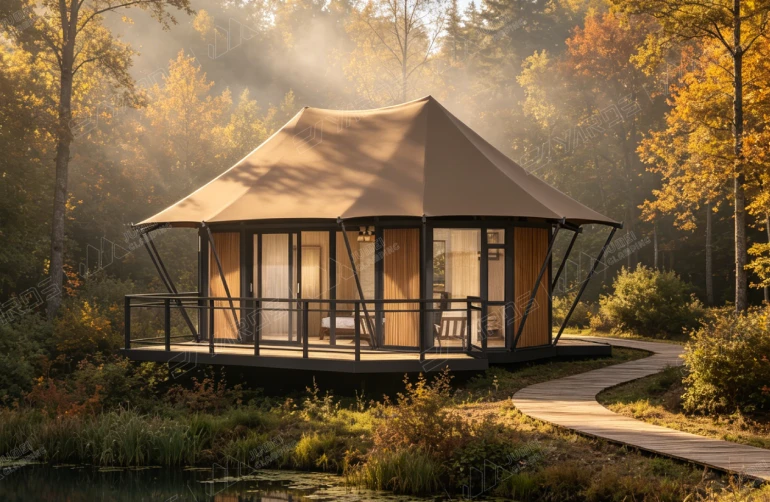
The first requirement for a successful luxury tent hotel is choosing an attractive location. Scenic environments such as mountains, forests, lakesides, beaches, deserts, vineyards, and grasslands are ideal because travelers increasingly seek destinations that offer both natural beauty and comfortable accommodation.
Accessibility is equally important. While guests appreciate remote natural settings, the resort should still be reasonably accessible by road or local transportation. Convenient access improves occupancy rates and enhances the overall guest experience.
A clear market positioning is another key factor. Investors should determine whether the project targets luxury travelers, couples, families, corporate retreats, wellness tourism, or adventure enthusiasts. A well-defined target market helps guide tent selection, pricing strategies, and service planning.
Product quality also plays a major role in project success. Luxury tent hotels should provide much more than basic shelter. Spacious interiors, comfortable bedrooms, private bathrooms, air-conditioning, quality insulation, and modern furnishings all contribute to a premium guest experience that supports higher room rates.
Supporting facilities further increase the value of the resort. Restaurants, cafés, swimming pools, outdoor lounges, campfire areas, spa facilities, walking trails, and recreational activities encourage guests to stay longer and improve customer satisfaction.
Operational planning is equally important. Investors should prepare for housekeeping, maintenance, booking management, landscaping, security, and customer service before opening the resort. Efficient operations help maintain consistent guest experiences and positive reviews.
One of the most common questions from new investors is how many luxury tents should be purchased in the first phase.
For first-time resort operators, starting with 8 to 12 luxury tents is often a practical approach. This scale allows investors to control the initial budget while creating enough accommodation capacity to generate stable revenue. It also provides flexibility to adjust pricing, operations, and marketing based on real customer demand.
For medium-sized resort developments, 15 to 25 tents are often suitable. This number allows operators to welcome more guests, accommodate families and groups, and achieve better operational efficiency while maintaining a premium atmosphere.
Large luxury resorts may include 30 or more tents, especially when combined with restaurants, wellness centers, event venues, and outdoor activity facilities. However, larger developments also require greater investment, stronger management capabilities, and a more comprehensive marketing strategy.
Many experienced developers prefer a phased expansion strategy. They begin with around 10 tents, evaluate occupancy and guest feedback during the first operating season, and then gradually expand as demand grows. This approach reduces financial risk while allowing the resort to scale sustainably.
When selecting tent quantities, investors should also consider available land, infrastructure capacity, local tourism demand, and long-term business goals. Rather than purchasing the largest possible number of units immediately, it is often more effective to match accommodation capacity with expected occupancy levels.
Choosing a reliable manufacturer is equally important. Buyers should evaluate product quality, structural durability, weather resistance, customization capabilities, installation support, and after-sales service. A high-quality supplier can improve both project efficiency and long-term operating performance.
Overall, Luxury Tent Hotel projects offer attractive opportunities for investors seeking to enter the growing outdoor hospitality market. By selecting a suitable location, developing strong supporting facilities, purchasing high-quality accommodation units, and starting with a well-planned number of tents, investors can reduce project risks and build a profitable resort with excellent long-term growth potential.


